

Mobile Game Monetization Strategies That Work in 2026
October 30, 2026
How to Design Game Levels That Keep Players Excited
November 20, 2026
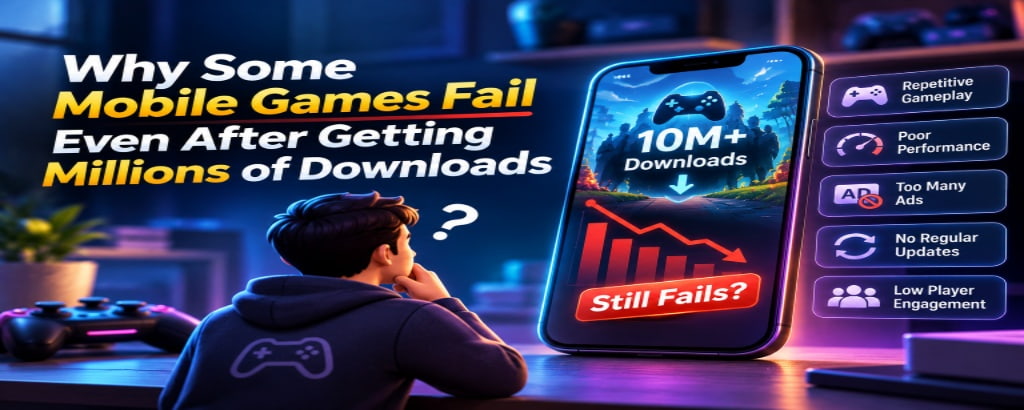
Have you ever wondered why some mobile games receive millions of downloads but still fail to become successful? At first, a high number of downloads may look like a big achievement, but attracting players is only the beginning. The real challenge is keeping them interested and encouraging them to return. Even with an effective Mobile Game Monetization strategy, a game can struggle if it fails to provide an enjoyable experience.
The mobile gaming industry is growing rapidly, and thousands of new games compete for players’ attention every day. Some games become popular within a few weeks, while others lose their audience shortly after launch. The difference often comes down to gameplay quality, performance, user experience, marketing, and long-term planning. Let’s explore why mobile games fail despite millions of downloads and what developers can do to avoid these common mistakes.
1. Millions of Downloads Don’t Guarantee Success
Getting millions of downloads is exciting, but downloads alone don’t tell the complete story. A player might install a game because of an attractive advertisement, trending gameplay video, or recommendation from a friend. However, if the experience doesn’t meet their expectations, they may uninstall it within minutes.
This is why developers should focus on active users, session duration, and player retention instead of looking only at download numbers. A game with fewer downloads but a loyal and active community can sometimes perform better as a business than a game with millions of inactive users.
2. Repetitive Gameplay Makes Players Lose Interest
One of the biggest reasons players stop playing a mobile game is repetitive gameplay. When users experience the same missions, levels, enemies, and challenges repeatedly, the excitement gradually disappears.
Players enjoy discovering something new. Developers should introduce creative levels, interesting challenges, unlockable characters, and rewarding progression systems to keep the experience fresh.
A successful game should offer something that makes players curious about what comes next. Even simple gameplay can become exciting when developers introduce new ideas and meaningful challenges.
3. Poor Game Performance Drives Players Away
Imagine downloading an exciting game only to experience constant lag, slow loading, or unexpected crashes. Most players won’t wait long before uninstalling it.
Performance problems can damage even the most creative gaming concepts. Mobile games should be optimized to work smoothly across different smartphones, screen sizes, and hardware configurations.
Developers need to focus on graphics optimization, memory management, loading speed, battery consumption, and compatibility testing. A smooth experience helps players enjoy the game without unnecessary interruptions.
4. Complicated Controls and Poor User Experience
Players should understand how to play a game without feeling confused. Complicated controls, unclear instructions, and poorly designed menus can make the experience frustrating, especially for beginners.
A clean user interface and responsive controls make it easier for players to explore the game. Tutorials should introduce important features naturally without overwhelming users with too much information.
The first few minutes are particularly important because they create the player’s first impression. If the beginning feels confusing or difficult, users may leave before discovering the best parts of the game.
5. Too Many Advertisements and Unfair Monetization
Generating revenue is important for game developers, but excessive advertisements and expensive purchases can damage the player experience.
For example, showing advertisements after every level or making important progress dependent on paid upgrades can frustrate users. Players want to enjoy the game without feeling forced to spend money.
Developers should choose a balanced monetization model using optional purchases, rewarded advertisements, subscriptions, or premium features. The goal is to generate revenue while allowing players to enjoy the core gaming experience.
6. Lack of Multiplayer and Social Features
Modern players often enjoy sharing their gaming experiences with friends and competing with other users. A game without social interaction may miss opportunities to build a stronger community.
Multiplayer modes, leaderboards, team challenges, friend invitations, and community events can make games more interactive. These features encourage friendly competition and give players additional reasons to return.
However, multiplayer functionality should match the game’s concept. Adding unnecessary features simply to follow trends may increase development costs without improving the experience.
7. No Regular Updates or Fresh Content
Launching a game is only the beginning of its journey. If developers stop introducing new content, players may eventually lose interest.
Regular updates can include new characters, levels, missions, seasonal events, gameplay improvements, and bug fixes. These additions give existing users reasons to return and help maintain interest over time.
Developers should also communicate upcoming changes and listen to community feedback. A game that continues improving has a better opportunity to build a loyal audience.
8. Ignoring Player Feedback and Reviews
Player reviews can provide valuable information about what is working and what needs improvement. Negative feedback may highlight problems with controls, difficult levels, advertisements, performance, or missing features.
Ignoring these concerns can damage a game’s reputation. Developers should regularly review feedback, identify common complaints, and prioritize improvements that make the biggest difference.
Listening to players also helps create a stronger relationship between the development team and the gaming community. When users feel heard, they are more likely to remain connected to the game.
9. Marketing That Doesn’t Match the Actual Game
Marketing can bring thousands or even millions of downloads, but misleading advertisements can create unrealistic expectations.
If a promotional video shows gameplay that is completely different from the actual experience, players may feel disappointed after installation. This can result in negative reviews, quick uninstalls, and reduced trust.
Developers should use genuine gameplay footage, attractive screenshots, and clear descriptions to promote their products. App Store Optimization (ASO), social media campaigns, influencer collaborations, and gameplay videos can help reach the right audience.
Honest marketing attracts players who are genuinely interested in the experience being offered.
10. Not Using Data and Modern Technology Effectively
Modern game development offers powerful tools that help developers understand player behavior and improve gameplay. Analytics can reveal which levels players struggle with, where they stop playing, and which features receive the most attention.
Artificial intelligence can also support smarter characters, personalized challenges, automated testing, and gameplay analysis. These technologies help development teams make better decisions and identify opportunities for improvement.
The important thing is to use technology with a clear purpose. Adding advanced features without understanding player needs does not automatically make a game successful.
11. How to Build a Mobile Game That Lasts
Avoiding these mistakes starts with proper planning. Developers should understand their target audience, create a unique game concept, design enjoyable gameplay, and select the right technology before beginning development.
Successful games are not built only to attract attention for a few days. They are designed to provide enjoyable experiences that encourage players to return over time. Combining creative ideas with technical expertise and a strong development strategy can make a significant difference.
About SSN Games
At SSN Games, we believe that creating a successful mobile game requires creativity, innovation, and the right technology. Our team focuses on transforming ideas into engaging, scalable, and high-performance gaming experiences.
From game concept and UI/UX design to development, testing, optimization, and deployment, we work across the complete game development process. We focus on creating smooth gameplay, attractive designs, and interactive features that meet modern player expectations.
Whether you are a startup, business, or entrepreneur with a new gaming idea, we aim to help turn your vision into an exciting digital experience.
We are SSN Games, and we are experts in game development. Contact us, and together we’ll create engaging games that players love to play!
Final Thoughts
Millions of downloads may bring attention to a mobile game, but long-term success depends on much more than popularity. Repetitive gameplay, poor performance, excessive advertisements, missing updates, and weak player engagement can all affect a game’s growth.
Developers who focus on player satisfaction, continuous improvement, smart monetization, and modern technology have better opportunities to build lasting gaming experiences.
Remember, attracting players is the first achievement, but giving them a reason to stay is what makes a mobile game truly successful.