

How Game Development Can Boost Your Brand Engagement
July 3, 2026
10 Common Mistakes to Avoid When Developing Your First Mobile Game
July 24, 2026
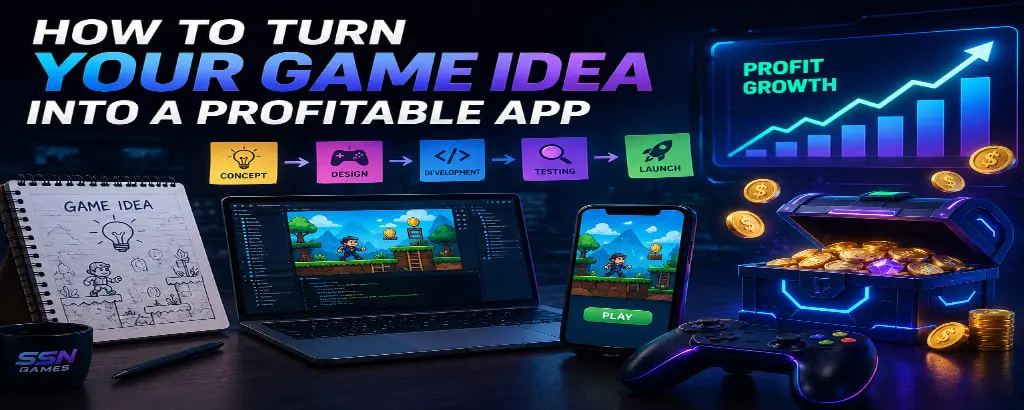
Have you ever had a brilliant game idea and thought, “This could be the next big mobile game”? You’re not alone. Many successful games started as simple ideas—a unique character, an interesting challenge, or a new way to entertain players. But turning an idea into a profitable app requires much more than creativity. It needs careful planning, smart development, engaging gameplay, and the right monetization strategy.
The gaming market is highly competitive, but it also offers incredible opportunities for developers, startups, and businesses. If you have a strong concept and execute it properly, your game can attract loyal players and generate long-term revenue. Here’s how you can transform your game idea into a successful and profitable app.
Start With a Clear and Unique Game Concept
Every successful game begins with a clear idea. Before you start development, ask yourself what makes your game different. Why would someone choose to download and play your game instead of thousands of others available in app stores?
Your concept doesn’t have to be extremely complicated. In fact, many popular games succeed because they take a simple idea and make it fun, addictive, and easy to understand. Define your game’s genre, target audience, gameplay style, characters, challenges, and main objective.
The clearer your idea is at the beginning, the easier it becomes to turn it into a complete game.
Research Your Target Audience and Competition
A great idea is only valuable if people actually want to play it. Before investing time and money, research your potential players and competitors.
Understand who your target audience is, what types of games they enjoy, which devices they use, and what features keep them engaged. You should also analyze similar games to discover what they do well and where they fall short.
The goal isn’t to copy competitors. Instead, use this research to find opportunities to create something better, more engaging, or more unique. Good market research can prevent expensive mistakes and help you build a game that matches real player expectations.
Create a Prototype Before Full Development
Going directly from an idea to full-scale game development can be risky. A smarter approach is to build a basic prototype first.
A prototype is a simple version of your game that focuses on the core gameplay mechanics. It doesn’t need perfect graphics, advanced animations, or dozens of features. Its purpose is to answer one important question: Is the game actually fun to play?
By testing a prototype, you can collect feedback, identify problems, and improve the concept before spending heavily on full development. This can save considerable time and money while helping you create a stronger final product.
Focus on an Engaging Player Experience
Beautiful graphics can attract attention, but gameplay keeps players coming back. Your game should be easy to understand, responsive, enjoyable, and rewarding.
Players need a clear reason to continue playing. This can come from unlocking new characters, completing challenging levels, earning rewards, competing with friends, or exploring new environments.
Avoid making the game too complicated at the beginning. A smooth onboarding experience helps new users quickly understand the controls and objectives. As players progress, you can gradually introduce more difficult challenges and advanced features.
The best games create a balance between challenge and reward. Players should feel motivated to continue without becoming frustrated or bored.
Use AI to Build Smarter Gaming Experiences
Technology is transforming how games are created, and AI in game development is playing an increasingly important role. Artificial intelligence can help developers create smarter NPCs, personalized gameplay, adaptive difficulty levels, realistic environments, and more efficient testing processes.
AI can also analyze player behavior to understand which levels users enjoy, where they stop playing, and what features increase engagement. Developers can use this information to improve the game and provide a more personalized experience.
Using AI effectively doesn’t mean replacing creativity. It means giving developers smarter tools to build better experiences faster and make informed decisions based on player behavior.
Choose the Right Monetization Strategy
A profitable game needs a monetization model that generates revenue without ruining the player experience. The right approach depends on your game’s audience, genre, and overall design.
Free-to-play games often generate revenue through in-app purchases, rewarded advertisements, subscriptions, cosmetic items, or premium upgrades. Paid games charge users before downloading, while some games combine multiple revenue models.
The key is fairness. Players shouldn’t feel forced to spend money just to enjoy the game. A good monetization strategy adds value while maintaining a balanced and enjoyable experience.
For example, rewarded ads can allow players to earn extra lives or bonuses voluntarily. Cosmetic purchases can offer customization without giving paying users an unfair competitive advantage.
Test, Optimize, and Improve Before Launch
No game should be launched without thorough testing. Bugs, crashes, slow loading times, and poor controls can quickly lead to negative reviews and uninstalls.
Test your game across different smartphones, screen sizes, operating systems, and network conditions. Pay attention to loading speed, battery consumption, frame rates, and overall stability.
Beta testing with real players is especially valuable because it reveals issues developers may overlook. Player feedback can help improve controls, difficulty levels, rewards, and other important parts of the experience.
A polished launch creates a stronger first impression and improves your chances of receiving positive reviews.
Build Excitement Before Your Game Goes Live
Marketing shouldn’t begin after launch. Start building excitement while your game is still being developed.
Share behind-the-scenes content, gameplay previews, character reveals, trailers, and development updates through social media. Creating an early community gives potential players a reason to follow your journey and look forward to the release.
You can also work with gaming influencers, content creators, and beta testers to introduce your game to a wider audience. A strong pre-launch strategy can help generate early downloads and valuable word-of-mouth promotion.
Why Choose SSN Games?
At SSN Games, we believe every great game begins with a powerful idea and the right technology to bring it to life. We are SSN Games,
and we are experts in developing games fast with high-tech technology. Our team focuses on creating engaging, scalable, and high-performance gaming experiences that help businesses, startups, and entrepreneurs transform their concepts into successful digital products.
From initial planning and game design to development, testing, optimization, and launch, we focus on every stage of the journey. Our goal is to combine creativity, advanced technology, and strategic thinking to create games that players enjoy and businesses can grow.
Final Thoughts
Turning a game idea into a profitable app doesn’t happen overnight. It requires a strong concept, proper market research, engaging gameplay, smart technology, effective monetization, thorough testing, and continuous improvement.
The most successful games don’t simply look impressive—they understand their players and give them a reason to return. Start with a clear vision, test your idea early, listen to user feedback, and focus on creating genuine value.
With the right strategy and an experienced development partner, your game idea can move from a simple concept to an engaging app that attracts players, builds a loyal community, and creates real business opportunities.