

The Secret to Creating Highly Engaging Games
August 17, 2026
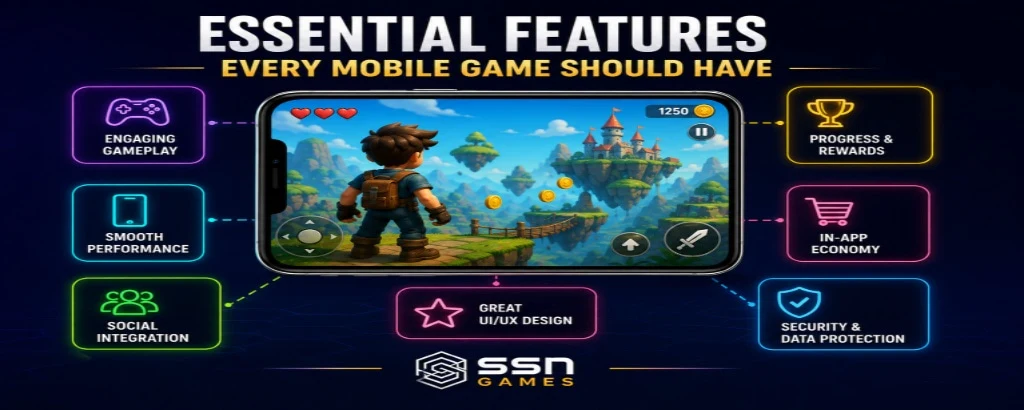
Mobile gaming has become a major part of modern entertainment. With millions of people playing games on smartphones every day, the competition between game developers is stronger than ever. Players have countless options available on app stores, so simply creating a game is not enough. A successful mobile game needs to provide an experience that is enjoyable, smooth, rewarding, and easy to understand.
Whether you are planning a casual puzzle game, an action-packed adventure, a sports game, or a multiplayer experience, certain features can make a major difference. The right combination of gameplay, design, technology, and user experience can turn a simple concept into a game that players want to download, play, and recommend.
A Simple and Engaging Gameplay Experience
The most important feature of any mobile game is its gameplay. Players should understand what they need to do without spending too much time learning complicated controls. A simple beginning allows new players to enter the game quickly and discover its features naturally.
At the same time, the gameplay should provide enough depth to keep experienced players interested. A good game creates a balance between simplicity and challenge. Players should feel that they are improving as they continue playing, whether they are completing levels, defeating opponents, unlocking characters, or achieving higher scores.
The goal is to make every gaming session feel enjoyable and meaningful.
Smooth and Responsive Controls
Mobile games depend heavily on touch controls, making responsiveness extremely important. Players expect taps, swipes, gestures, and other interactions to work immediately.
Poor controls can quickly frustrate players, even if the game itself has an excellent concept. Developers should design controls according to the type of game and make them comfortable for different screen sizes.
Tutorials and visual guidance can also help new players understand the controls without interrupting the gameplay experience. When controls feel natural, players can focus on enjoying the game instead of trying to figure out how it works.
Attractive UI and Visual Design
The visual appearance of a game creates the first impression. A clean user interface, consistent colors, readable text, attractive menus, and well-designed characters can make a game feel professional.
However, good design is not only about adding impressive graphics. Every visual element should have a purpose. Menus should be easy to navigate, important information should be clearly visible, and players should never feel confused about what to do next.
A strong visual identity also helps a game become recognizable. Unique characters, environments, animations, and artistic styles can give a mobile game its own personality.
Fast Loading and Excellent Performance
Nobody likes waiting for a game to load or dealing with constant lag. Performance is one of the most important factors influencing player satisfaction.
A mobile game should load quickly and run smoothly across a wide range of smartphones. Developers need to optimize graphics, animations, memory usage, battery consumption, and other technical elements to create a stable experience.
Performance becomes even more important when targeting users with different hardware capabilities. A game designed only for high-end devices may lose a large audience. Proper optimization helps ensure that more players can enjoy the experience.
Rewards and Progression Systems
Players love seeing their efforts rewarded. A strong progression system gives users a reason to continue playing and creates a sense of achievement.
Rewards can include new characters, levels, abilities, items, achievements, or customization options. Players should feel that their progress has meaning and that there is always something interesting ahead.
Daily missions, challenges, login rewards, and special events can also encourage players to return regularly. When progression is designed properly, it keeps the experience fresh without making players feel forced to play.
Social and Multiplayer Features
Modern players often want more than a single-player experience. Social and multiplayer features can make a game much more interactive by allowing users to compete or cooperate with friends and other players.
Leaderboards, team challenges, friend invitations, multiplayer matches, and community events can create a stronger connection between players. These features can also help a game grow organically because players are more likely to invite friends when they have someone to compete or play with.
For certain genres, multiplayer functionality can become one of the biggest reasons players continue using the game.
Personalization and Customization
Players enjoy making their gaming experience feel personal. Customization features allow them to choose characters, outfits, accessories, environments, abilities, or other visual elements.
Personalization can give players a greater sense of ownership and encourage them to spend more time inside the game. It can also provide opportunities for optional purchases without affecting the basic gameplay experience.
Even simple customization options can make players feel more connected to their characters and progress.
Secure and Reliable In-App Purchases
For games using monetization, secure payment functionality is essential. In-app purchases should be easy to understand and should provide clear value to players.
Developers should avoid creating systems that make players feel forced to spend money to enjoy the game. Optional upgrades, cosmetic items, additional content, and rewarded experiences can provide revenue opportunities while maintaining a positive user experience.
A trustworthy monetization system helps build confidence and supports the long-term growth of the game.
Regular Updates and Fresh Content
Launching a game is only the beginning. Players expect developers to continue improving the experience after release.
Regular updates can introduce new levels, characters, missions, features, seasonal events, and improvements. Updates also provide an opportunity to fix bugs and respond to player feedback.
Fresh content gives existing users a reason to return and can attract players who may have previously stopped playing. A game that continues evolving has a better opportunity to build a long-term community.
Smart Technology for Better Gaming Experiences
Modern technology is changing how games are created and experienced. Artificial intelligence, advanced analytics, cloud technology, and improved rendering systems are helping developers create more intelligent and interactive experiences.
AI can assist with smarter NPC behavior, automated testing, player personalization, and gameplay analysis. Analytics can help developers understand which features players enjoy and where they lose interest.
Using the right technology allows developers to improve the gaming experience while making development and maintenance more efficient.
Why These Features Matter for Highly Engaging Games
The strongest mobile games are not successful because they have one amazing feature. Their success comes from combining multiple elements into one smooth experience.
Good gameplay attracts players, responsive controls make playing enjoyable, rewards encourage progression, social features create connections, and regular updates keep the experience fresh. Together, these elements create Highly Engaging Games that players are more likely to remember, recommend, and continue playing.
About SSN Games
At SSN Games, we understand that creating a successful mobile game requires the right combination of creativity, technology, design, and development expertise. We are SSN Games, and we are experts in developing games fast with high-tech technology. Our team works with businesses, startups, and entrepreneurs to transform creative concepts into engaging and scalable gaming experiences.
From game concept and UI/UX design to development, testing, optimization, and deployment, we focus on creating games that are built around player expectations. Our goal is to combine innovative ideas with modern technology to deliver smooth, enjoyable, and performance-focused gaming experiences.
Final Thoughts
A successful mobile game needs more than attractive graphics or an interesting concept. It needs smooth gameplay, responsive controls, excellent performance, intuitive design, meaningful rewards, social interaction, personalization, secure monetization, and regular updates.
The mobile gaming market will continue to evolve, and player expectations will continue to rise. Developers who focus on user experience and use modern technology intelligently will have a stronger opportunity to stand out.
If you have a great game concept, the next step is turning that idea into an experience players genuinely enjoy. With thoughtful planning, the right features, and an experienced development team, your game can move from a simple idea to a product capable of building a loyal player community.